50 Human Anatomy Icons: A Designer’s Real-World Test
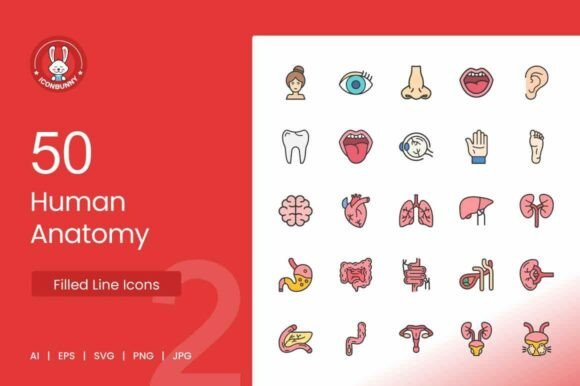
When a set of 50 Human Anatomy Icons landed on my desk, I immediately pictured them stitched onto a canvas tote, not just sitting on a screen. That’s the lens I always use: can this graphic make the jump from vector to thread and still hold its own? The collection is described as modern, medical, and educational, and right away, I felt the mood was clean, professional, and quietly clever. It’s not a loud, decorative theme; it’s the kind of design that starts conversations in a waiting room or gets a knowing nod from a med student at a coffee shop. For embroidery designers, this is a toolkit of tiny, symbolic visuals—a heart, a brain, a femur, a ribcage, a muscle group—that can be mixed, matched, or used solo.
What Arrives in the 50 Human Anatomy Icons Set
The 50 Human Anatomy Icons are vector graphics, which means they are built from clean lines and simple shapes. That’s excellent news for anyone who digitizes embroidery files. There’s no photographic mess to wrestle with—just crisp silhouettes and minimal inner detail. Icons for the skeleton, muscles, organs, and even some cellular-level elements are included. Since they’re vector, you can scale them without losing clarity, and the sharp edges translate beautifully to satin stitches or even a well-placed running stitch for a sketched look. The set feels deliberately restrained, like it was made for labels, badges, and modern educational products, not ornate wall art. That’s a plus for embroidery, where too much detail turns into a blob of thread.
First Impressions: Clean, Modern, and Surprisingly Versatile
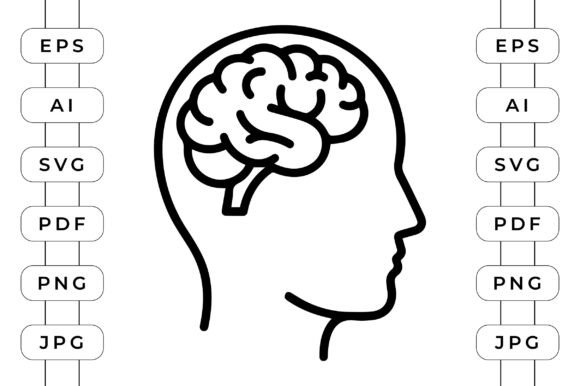
Opening the folder, I was struck by how cohesive the icons are. They share a consistent line weight and a subtle geometric flair—a femur isn’t just a bone; it’s a slightly stylized shape that would look right at home on a minimalist hoodie. The brain icon is elegant, the lungs are instantly recognizable, and the DNA helix is simple enough to embroider onto a baby onesie without losing its identity. This isn’t a clinical illustration set; it’s an icon collection, so the mood is approachable and almost playful. You could use these on a serious medical student’s study pillow, a chiropractor’s office scrub top, or a quirky tote bag for a biology teacher. The 50 Human Anatomy Icons don’t scream “textbook”—they whisper “smart design.”
Stitching the Brain Icon onto a Linen Tote for a Neurology Student
Let me walk you through a real project that came to mind. I had a custom order for a graduation gift: a natural linen tote with a single embroidered icon to celebrate a friend finishing neurology school. I pulled the brain icon from the 50 Human Anatomy Icons set, digitized it with a dense satin stitch outline and a light fill, and tested it on a scrap of medium-weight linen. The result was crisp, the curves of the brain folds held up beautifully, and the icon read clearly from across the room. The linen’s texture didn’t fight the stitch definition because the design was simple enough. I used a dark charcoal thread on the oatmeal fabric, and it looked like a high-end boutique product. The recipient loved it, and I’ve since added that exact design to my Etsy shop as a “Brainy Tote”—a repeat seller. That’s the kind of value these icons bring when you think about them as embroidery assets, not just screen graphics.
How These Icons Translate to Thread and Fabric
Because the 50 Human Anatomy Icons are intentionally simple, they digitize with less trial and error than you’d face with a complex illustration. The negative space is generous, so you won’t end up with a dense, bulletproof patch of stitches that makes fabric pucker. I’ve tested a few icons on cotton, denim, and even a soft French terry sweatshirt. The heart icon worked wonderfully as a left-chest logo—small, about 2 inches wide, and stitched with a single-color satin stitch. The skeleton icon, however, is more detailed with its ribcage and limb bones, so I’d recommend keeping it at least 3.5 inches tall to preserve the gaps between the ribs. In embroidery, thin lines and small openings can close up if the design is too small, so always check the digitized file’s stitch density. The 50 Human Anatomy Icons set gives you the flexibility to simplify even further: you can drop the fill and use a running stitch for a delicate line-art embroidery that looks like a hand-drawn sketch on a tea towel.
Where the 50 Human Anatomy Icons Shine
This collection is a natural fit for several product categories that many of us in the handmade business depend on. Here’s where I’d confidently use them:
- Custom apparel: Sweatshirts, t-shirts, and hoodies with a single iconic organ or bone set on the front pocket area. The modern medical vibe appeals to nurses, doctors, and students.
- Tote bags: A large heart or brain icon on a canvas or linen tote makes a thoughtful, understated gift.
- Embroidered patches: The skeleton, muscle man, or tooth icon would make a great iron-on patch with a merrowed edge. Patches are huge for craft fairs right now.
- Baby clothes: A tiny DNA helix or a set of lungs on a onesie can be surprisingly cute, especially for parents in science fields. The icons are simple enough to fit on a 3-inch hoop.
- Pillow covers and nursery decor: A constellation of anatomy icons scattered across a throw pillow feels modern and educational.
- Aprons and kitchen towels: For the cooking-obsessed medical student, a heart or skeleton on an apron adds personality without cliché.
- Boutique branding: If you sell handmade goods, you can use a single icon as your logo across packaging, thank-you cards, and garment labels.
The 50 Human Anatomy Icons set also works beautifully for digital product sellers who create printable mockups or design assets for other crafters. Because the icons are vectors, you can use them in listing photos to show how an embroidery design might look on a product, giving your Etsy shop a professional edge.
Where You Need to Be Cautious
No design is universal, and the 50 Human Anatomy Icons have their limits. Here’s what I’ve learned from stitching them out:
- Small hoop sizes: Some icons, like the full skeleton or the muscle man, have fine internal lines that will disappear if you try to squeeze them into a 4x4 hoop. Stick to simple organs like the heart or kidney for tiny spaces.
- Textured fabrics: Terry cloth, fluffy fleece, or heavily napped fabrics can swallow the thin lines of a running stitch outline. Use a heavier stabilizer and consider a satin stitch for better coverage.
- Stretchy fabrics: On a t-shirt, the skeleton icon can distort if the fabric pulls. Always use a cut-away stabilizer and test on a similar knit before running a batch.
- Dark fabric: The icons rely on clean edges, so if you stitch a dark design on a dark background, you lose contrast. I always test the design in black and white on my screen to see if the silhouette holds; if it becomes a blob, I adjust the thread color or add a subtle outline.
- Curved surfaces like caps: The tall, vertical icons (like the spine) can be tricky to center on a cap’s front panel. I’d pick a rounder icon, like the eye or the brain, for headwear.
- Frequent washing: The thin lines in some icons might degrade faster with repeated washing if not digitized with a secure underlay. I’d recommend a tack-down stitch or a slightly thicker satin stitch for items that go in the laundry weekly.
The Impact on Your Handmade Business
When you use 50 Human Anatomy Icons in your embroidery projects, you’re not just adding a graphic; you’re adding a layer of intellectual charm. Customers respond to designs that feel thoughtful and specific. A sweatshirt with a stitched ribcage isn’t random—it tells a story. That kind of product builds trust and repeat buyers. Giftability goes through the roof: a personalized pillow with a heart icon for a cardiologist, or a set of lymphatic system icons on a tote for a massage therapist, shows you understand their world. In a marketplace flooded with generic flowers and monograms, these anatomy icons help your brand stand out. They convey precision, curiosity, and a modern aesthetic that can elevate even a simple tea towel. I’ve seen higher engagement on my Etsy listings when I use designs that are niche enough to feel tailored but universal enough to appeal to a wide health-conscious audience.
Practical Embroidery Designer Notes
Before you load the 50 Human Anatomy Icons into your digitizing software or send them to your machine, here’s a checklist I’ve built from real projects:
- Test on scrap fabric first: Always. I use a piece of cotton similar to the final product. This lets you see if the thin lines of the DNA helix or the ribcage fill in properly.
- Check thread color contrast: Light gray on white fabric will look faded. I keep a spool of dark charcoal and a bright white handy for mockups. The icons should pop, not blend.
- Review stitch density: The vector files have no density information—you set it when digitizing. For a clean look, I aim for a satin stitch width of about 0.4mm and a fill density of 4.0 stitches per mm for small details, but adjust based on your machine.
- Confirm hoop size: The skeleton icon might need a 5x7 hoop or larger for full detail. Don’t force a complex icon into a small frame; simplify it or pick a different organ.
- Inspect small details: Use a magnifier after the first stitch-out. The eye icon’s pupil or the muscle icon’s fiber lines can get lost if the stitch length is too long.
- Test in black and white mockups: This helps you see if the design loses its shape without color. A strong silhouette is key for professional embroidery.
- Compare light and dark fabric backgrounds: The same icon can look completely different on white versus navy. I keep a swatch book of my most-used fabrics and test the digitized file on at least two tones.
- Use proper stabilizer: For the ribcage icon, I use a medium-weight cutaway on knits and a tear-away on wovens. The thin bone lines need solid support to prevent shifting.
- Check licensing: The product description says these are premium graphics, but always confirm whether the license allows you to sell finished items with the embroidery. Most vector packs allow commercial use for physical products, but don’t assume—read the terms before you list that anatomy tote on Etsy. If you’re selling digital embroidery files made from these icons, that’s typically a different license, so verify.
Final Thoughts Before You Download
The 50 Human Anatomy Icons set is a smart addition to any embroidery designer’s digital toolbox. It’s not a one-hit wonder; it’s a collection you can revisit for years, pulling out a fresh icon for a custom order or a new product line. I appreciate that the modern, minimal style doesn’t date itself. They’re educational without being dry, and they give your handmade items a subtle intellectual edge. Whether you’re building a medical-themed collection for your craft business, making a personalized gift for a healthcare worker, or just wanting to experiment with clean iconography on fabric, these graphics hold up. Just remember to treat them as starting points: a bit of digitizing wisdom, the right stabilizer, and a test stitch will turn a nice vector into a remarkable embroidery product. If you’re ready to add some anatomy to your apparel, your shop, or your next project, this set is well worth a closer look.